Comprehensive Power System Study for a 132 kV Industrial Network with 8 MW Solar Integration
Delivering a Safe, Reliable and Future-Ready Electrical Network
As industrial facilities continue to integrate renewable energy into their electrical infrastructure, maintaining system reliability becomes increasingly complex. Multiple power sources, varying voltage levels, and interconnected protection systems require detailed engineering analysis before commissioning and future expansion.
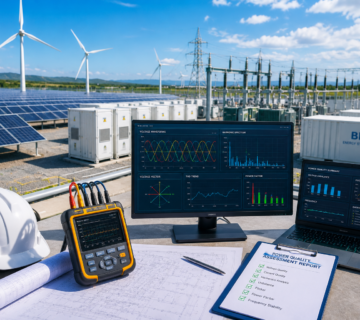
Power Projects successfully delivered a comprehensive Power System Study for a large cement manufacturing facility connected to a 132 kV utility grid with an 8 MW solar power plant integrated through a 33 kV collection network.
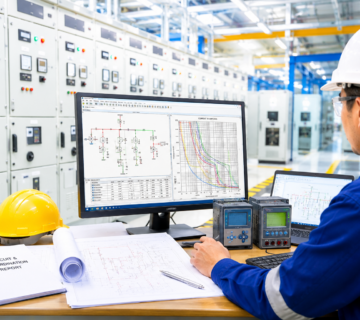
Using ETAP 22.5 and ETAP 24, our engineering team developed a detailed digital model of the complete electrical system and performed a series of integrated studies to verify network performance, protection, and operational reliability under both normal and contingency conditions.
Project Overview
Project Details
- ClientConfidential
- IndustryCement Manufacturing
- Project TypeIndustrial Power System with Solar PV Integration
Network Snapshot
- Grid Connection132 kV
- Solar Plant Capacity8 MW
- Solar Collection Voltage33 kV
- Distribution Voltages6.6 kV and 415 V
- SoftwareETAP 22.5 / ETAP 24
The electrical model represented the complete facility, including:
- 132 kV utility grid connection
- Main receiving substation
- 33 kV solar power plant
- Captive diesel generators
- Power transformers
- 6.6 kV switchgear
- Motor Control Centres (MCCs)
- Low-voltage distribution system
- Industrial process loads
The model was developed using the client's engineering data and validated prior to performing the required studies.
Customer Requirements
The client required a complete engineering assessment of the electrical network to:
- Prepare an updated Single Line Diagram (SLD)
- Evaluate steady-state network performance
- Determine system fault levels
- Verify protection coordination and unit protection
- Assess transient stability during disturbances
- Evaluate grid islanding and load shedding strategies
- Analyse reactive power compensation
- Perform Restricted Earth Fault (REF) protection analysis
The objective was to confirm that the electrical system would operate safely, reliably, and efficiently while supporting renewable energy integration.
Engineering Challenges
Integrating utility supply, captive generation, and solar PV within a multi-voltage industrial network introduces several technical challenges.
Key considerations included:
- Maintaining acceptable voltage profiles across multiple voltage levels
- Managing bidirectional power flow introduced by solar generation
- Verifying equipment capability under maximum fault conditions
- Achieving selective relay coordination across interconnected protection zones
- Maintaining system stability during electrical disturbances
- Ensuring reliable islanded operation through effective load shedding
- Providing sensitive transformer protection against internal earth faults
Addressing these requirements demanded a unified engineering approach supported by a validated digital model of the complete electrical network.
Engineering Studies Performed
1Single Line Diagram Development
An updated Single Line Diagram (SLD) was prepared to accurately represent the complete electrical network and provide the foundation for all subsequent analyses.
2Load Flow Study
Steady-state simulations were performed to evaluate:
- Bus voltage profiles
- Active and reactive power flow
- Transformer loading
- Cable loading
- Generator loading
- System losses
The study confirmed satisfactory network performance under anticipated operating conditions while maintaining acceptable equipment loading and voltage regulation.
3Short Circuit Study
Fault level calculations were carried out across the network to:
- Determine three-phase and unsymmetrical fault currents
- Verify switchgear and equipment interrupting ratings
- Support protection coordination studies
4Relay Coordination and Unit Protection
Protection studies were performed to ensure coordinated operation of protective devices throughout the network.
Critical equipment protection schemes were also reviewed to improve fault selectivity and minimise unnecessary plant outages.
5Transient Stability Study
Dynamic simulations assessed system behaviour during electrical disturbances, including faults and switching events.
The analysis evaluated:
- Generator response
- System recovery
- Overall network stability following transient events
6Grid Islanding and Load Shedding Study
The electrical network was assessed for operation following loss of utility supply.
Load shedding strategies were evaluated to:
- Maintain system stability
- Prioritise critical plant loads
- Support reliable autonomous operation
7Restricted Earth Fault (REF) Protection Analysis
REF protection studies were completed to ensure dependable detection of internal transformer earth faults while maintaining security during external fault conditions.
Project Outcomes
The integrated engineering assessment confirmed the suitability of the electrical system for reliable operation and provided the client with a validated technical basis for commissioning.
Key outcomes included:
Business Value Delivered
By combining multiple engineering studies within a single validated ETAP model, Power Projects enabled the client to make informed engineering decisions before commissioning while establishing a reliable foundation for future expansion.
The project delivered:
- Improved electrical system reliability
- Enhanced operational security
- Greater confidence in renewable energy integration
- Optimised network performance
- Reduced technical and operational risk
- A validated digital model to support future modifications and expansion
Software Used
Scope of Engineering Services
Conclusion
This project demonstrates Power Projects' capability to deliver integrated power system studies for complex industrial electrical networks that combine utility supply, captive generation, and renewable energy sources.
Through detailed ETAP modelling and a coordinated suite of steady-state, fault, protection, and dynamic analyses, the study provided the client with a technically robust foundation for safe commissioning, reliable operation, and future network development.
Whether supporting new installations, renewable energy integration, or expansion of existing facilities, Power Projects delivers practical engineering solutions that help clients improve system reliability, optimise performance, and make informed decisions with confidence.
Planning a Complex Industrial or Renewable-Integrated Network?
Power Projects delivers ETAP-based power system studies — load flow, short circuit, protection coordination, stability, and islanding analysis — for industrial and utility networks worldwide.